A Practical Guide to What Makes Commercial Design Work
Why What Makes Commercial Design Actually Work (Beyond Aesthetics) Matters More Than You Think
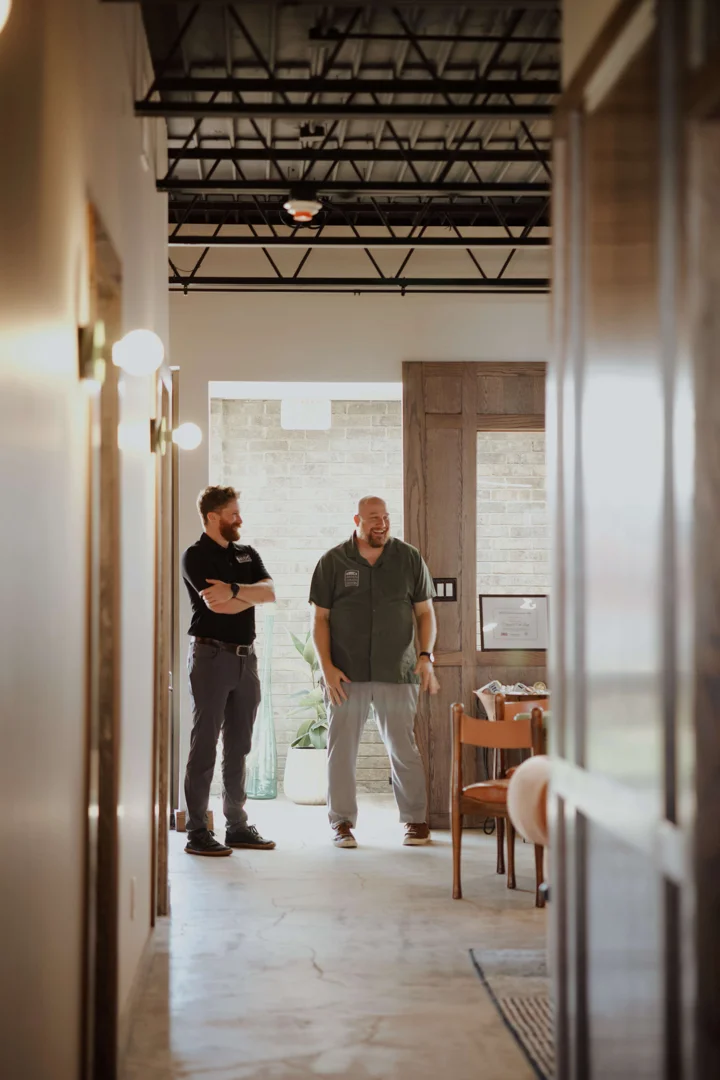
What makes commercial design actually work comes down to six core factors that drive real business outcomes:
- Performative design — layouts that guide movement, reduce cognitive load, and support the tasks people actually do
- Biophilic elements — natural light, greenery, and water features that measurably improve focus and well-being
- Smart building systems — IoT-driven HVAC, lighting, and controls that cut energy waste by up to 30%
- Strategic entrances and envelopes — storefront doors, curtain walls, and glazing that manage energy, security, and first impressions
- Universal design — inclusive, intuitive spaces that serve every user without calling attention to accommodations
- Art and identity — curated environments that increase foot traffic, reduce stress, and signal organizational values
A well-designed commercial space doesn't just look good — it works. It moves people efficiently, keeps them comfortable, reduces operating costs, and gives them a reason to stay longer or come back.
Have you ever walked into a lobby and felt immediately at ease — without knowing why? That feeling isn't accidental. Environmental psychology tells us that our surroundings trigger real physiological responses within seconds. Ceiling height, lighting quality, hallway width, the presence of natural materials — all of it registers before a single conscious thought forms.
The buildings that feel right have something in common: every design decision was made on purpose. Not just to look good in a rendering, but to serve the people inside.
That's the difference between decoration and design that actually works.
At Green Couch Design, our team sees what makes commercial design actually work (beyond aesthetics) as much more than a style question. It is about creating spaces that support people, operations, and long-term business goals. In the sections ahead, we break down the practical, research-backed principles that help commercial environments perform well, not just look polished.
_compressed.webp?alt=media&token=ebc42a67-2988-4df0-aa93-f600c80cbd60 "infographic showing six factors of high-performing commercial design beyond aesthetics - What Makes Commercial Design")
Performative Design: The Invisible Hand of Architecture
In commercial architecture, beauty is a baseline, but performance is the goal. We view architecture as an "invisible hand" that guides how people move and feel. This is what we call performative design—a strategy where every square foot is optimized to support the specific tasks of the occupants.
Effective space design begins long before the first brick is laid. It starts with a feasibility stage to ensure the building can physically and legally support its intended use. From there, we follow a rigorous commercial architecture process that transitions from schematic concepts into detailed construction documents. Managing a commercial project timeline effectively ensures that these performance goals are met without sacrificing the quality of the build.
Form Following Function in 2026
By 2026, the phrase "form follows function" has evolved. It no longer means a space should be utilitarian or cold; rather, it means the layout must act as a productivity supporter. Strategic zoning is essential. For example, in a modern office, we separate high-energy collaborative zones from "deep work" quiet areas to minimize cognitive load and distractions.
When a space is designed with this level of intentionality, it drives business success by reducing the friction of daily operations. Whether it's a medical office or a retail hub, the flow of people should feel intuitive, not forced.
The Role of Furniture and Durability
Furniture in a commercial setting is a performance tool, not just a styling choice. In high-traffic environments like Oklahoma City restaurants or clinics, residential-grade furniture will fail within months. We prioritize commercial-grade materials that offer durability and scuff resistance to prevent long-term repair bills.
Beyond durability, furniture choices are a matter of liability and safety. Poorly designed or fragile seating in a public space is a risk. When we handle tenant improvements, we integrate furniture selection early in the process to ensure the pieces complement the architectural flow while standing up to the rigors of commercial use.
What Makes Commercial Design Actually Work (Beyond Aesthetics)
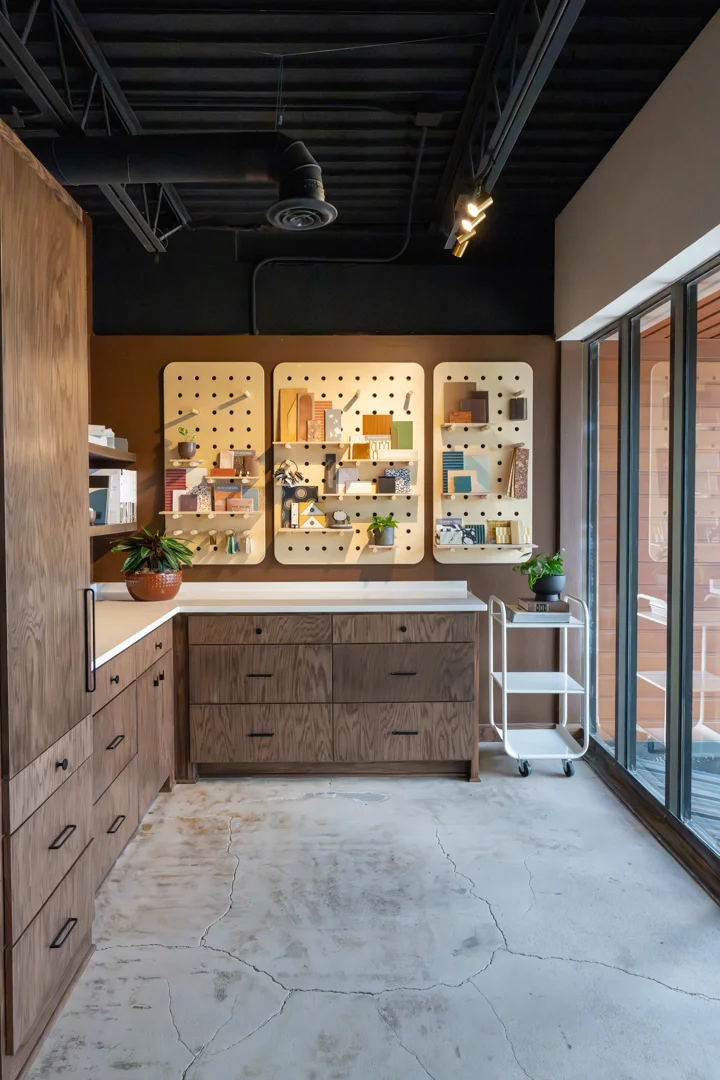
The success of a commercial building is often decided at the threshold. A storefront isn't just a wall; it's a silent sales team. What makes a storefront work is a combination of wide openings, clear sight lines, and an obvious sense of welcome. If a customer has to guess where the door is or feels intimidated by a heavy, dark entrance, you've lost them before they even step inside.
Invisible Security and User Experience
In 2026, security should be robust but "invisible." We want users to feel safe without feeling like they are entering a fortress. This is achieved through the building envelope—the physical separator between the conditioned and unconditioned environment.
Strategic building envelope construction utilizes impact-resistant glass, which serves three purposes:
- It provides high-level security against break-ins.
- It reduces outside noise by up to 40%, creating a calm interior.
- It blocks 99% of harmful UV rays, protecting both occupants and interior finishes.
Universal Design as a Business Standard
Universal design is more than just checking a box for ADA compliance; it's about creating an inclusive environment where everyone—regardless of ability—can navigate intuitively. In Oklahoma City, navigating commercial zoning and permitting requires a deep understanding of these standards. However, our goal is always to make these accommodations seamless. A winding ramp that serves as a beautiful architectural feature for everyone is far superior to a tucked-away lift that makes a user feel like an afterthought.
The Science of High-Performance Environments
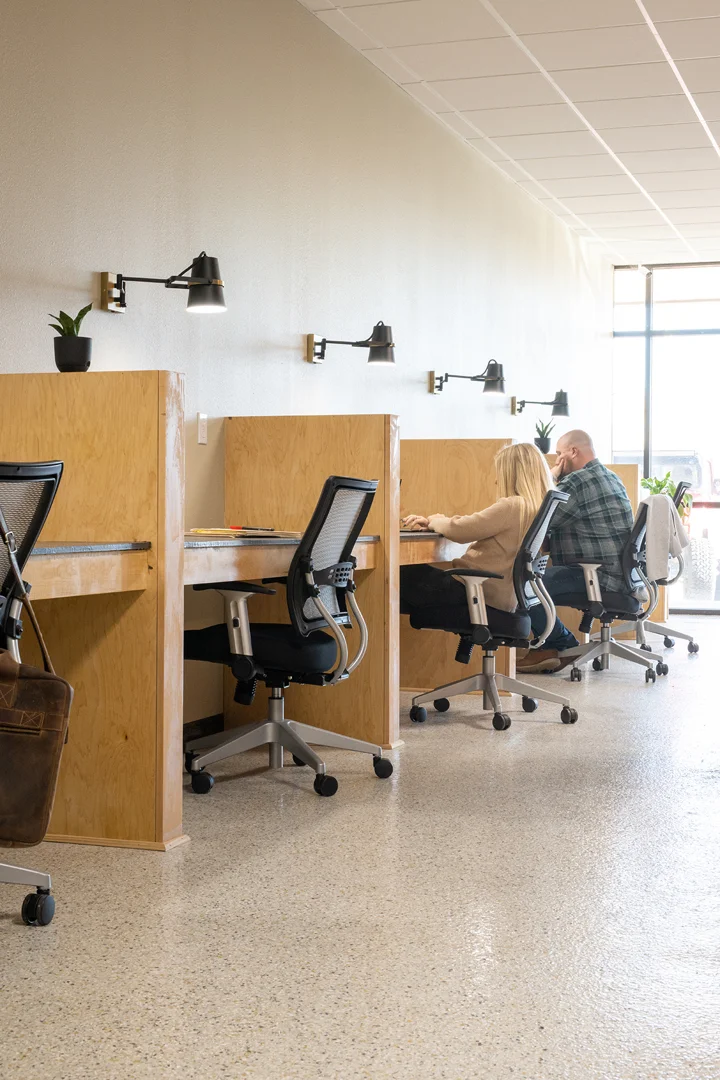
High-performing workplaces are rooted in science. We know that the physical environment directly impacts human biology. For instance, strategic window placement isn't just for the view; it's about regulating circadian rhythms. Proper exposure to natural light improves sleep quality and daytime alertness, which directly correlates to employee retention and performance.
Biophilic Integration and What Makes Commercial Design Actually Work (Beyond Aesthetics)
Humans are hardwired to seek connections with nature. Biophilic design is the practice of bringing the outdoors in, and it is a proven strategy for reducing stress. Research shows that employees in spaces with natural elements show significant improvements in cognitive function and decision-making.
We integrate these elements through:
- Living Walls: Real plants that improve air quality and acoustics.
- Fractal Patterns: Nature-inspired patterns in carpets or wall coverings that reduce stress levels.
- Water Features: Using sound to mask distracting office noise and lower heart rates.
This approach is particularly effective for boutique architecture projects where we can tailor the biophilic experience to a specific brand's culture.
Strategic Art and ROI
Art is often the first thing cut from a budget, but it is actually a competitive differentiator. Art does more than fill a wall; it drives measurable ROI. For example, neighborhoods with public art murals have seen weekend pedestrian traffic grow by 30%. In the Miami Design District, public art contributed to a 47% growth in foot traffic over four years.
In a workplace, art signals organizational values and fosters a sense of community. It can even impact safety; murals in mixed-use developments have been linked to a 28% decrease in violent crime. We recommend allocating a dedicated budget for art early in the planning phases to ensure it is integrated into the building's soul rather than tacked on at the end.
Sustainable Strategy: Adaptive Reuse and Smart Systems
Sustainability in 2026 is no longer a "nice-to-have"—it's a financial necessity. Commercial buildings consume about 18% of all U.S. energy. Reducing that consumption through smart design directly impacts the bottom line.
| Feature | Adaptive Reuse | New Construction |
|---|---|---|
| Embodied Carbon | Low (preserves existing structure) | High (requires new materials) |
| Speed to Market | Often faster with existing shell | Slower due to site prep/foundation |
| Character | High (historic/industrial charm) | Modern/Customizable |
| Code Compliance | Can be complex to retrofit | Built to current standards |
Adaptive reuse is often the "greenest" way to build because it preserves the embodied carbon of an existing structure. Whether we are restoring industrial spaces or converting a brewery, the goal is to blend history with modern efficiency.
Smart Systems: What Makes Commercial Design Actually Work (Beyond Aesthetics)
Smart building systems and the Internet of Things (IoT) have revolutionized how we manage environments. IoT sensors can read occupancy in real-time, adjusting HVAC and lighting to match actual usage. These systems can slash energy waste by up to 30%.
Avoiding common mistakes in commercial development often means investing in these systems early. Predictive HVAC zoning ensures that a restaurant kitchen stays cool while the dining room remains comfortable, preventing the "thermostat wars" that plague many commercial spaces.
Building Envelopes and Energy Savings
A high-performance building envelope is your first line of defense against energy loss. We often use curtain wall systems—non-structural outer coverings—to allow for massive amounts of natural light while maintaining high thermal performance.
When you evaluate a commercial property, look at the glazing. Modern double-pane low-E glass can block 90% of UV rays while maintaining crystal-clear views. This leads to dramatic heating and cooling savings, as the glass prevents the "greenhouse effect" in summer and heat loss in winter.
Frequently Asked Questions
Why do some buildings feel more stressful than others?
This is largely due to "cognitive load." When a building layout is confusing, or the lighting is harsh and flickering, your brain has to work harder to process the environment. Intuitive layouts, clear sight lines, and quality lighting reduce this stress and create a sense of calm.
Is adaptive reuse more cost-effective than new construction?
It depends on the state of the building. While you save on the "bones" of the structure, retrofitting old buildings for modern plumbing, electrical, and HVAC can be expensive. A thorough feasibility study is required to determine the ROI of an adaptive reuse project versus starting fresh.
How does biophilic design impact the bottom line?
Biophilic design reduces absenteeism and improves employee focus, which increases overall productivity. In retail or hospitality, natural elements increase "dwell time"—the longer a customer stays in a comfortable, nature-connected environment, the more likely they are to spend.
Conclusion
At Green Couch Design, we believe that great architecture should serve as a legacy for the community. Whether we are working on an OKC commercial project or a specialized renovation, our focus remains on creating spaces that are purposeful and resilient.
What makes commercial design actually work (beyond aesthetics) is the commitment to the human experience. By blending performative layout, smart technology, and sustainable practices, we build spaces that don't just stand there—they perform.
If you are ready to create a space that works as hard as you do, explore our commercial architecture portfolio to see how we bring these principles to life.