Historic Building Preservation: A Guide to Restoring Industrial Spaces
Restoring an industrial building is not about erasing its past. It is about understanding it well enough to give the structure a future. Former breweries, warehouses, factories, and civic buildings were built with durability and purpose, but rarely with residential life in mind. When these spaces are adapted for modern use, especially for living, the architect’s role becomes one of translation rather than reinvention.
Historic building preservation in industrial spaces requires balancing original materials, structural realities, and modern life safety expectations. Our work on projects like the Montana brewery conversion in Kalispell, Montana reinforced a simple truth: successful restoration starts with restraint, clarity, and a strong understanding of both commercial and residential design principles.
Understanding the Anatomy of an Industrial Restoration
Before design decisions are made, preservation begins with understanding scale, structure, and intent. Industrial buildings often feature generous floor plates, heavy structural systems, and materials designed to last for generations.
In projects like the former Kalispell brewery, restoration was not a matter of updating finishes. It required evaluating how space was originally used and how it could responsibly evolve. The building ultimately supported a mixed-use configuration, with a commercial ground floor and a full residential level above, totaling more than 6,200 square feet of developed space once additions were thoughtfully integrated.
Industrial restoration succeeds when the design responds to what the building already offers instead of forcing it into a residential mold it was never meant to fit.
Preservation Principle 1: Design With a Mixed-Use Code Mindset
One of the most overlooked aspects of restoring industrial spaces is that many projects remain “commercial” from a code perspective, even when residential use is introduced. This distinction fundamentally shapes the architectural approach.
In mixed-use restorations, fire separation, sound transmission, egress, and structural requirements often follow commercial standards. This was true in Kalispell, where residential living was located entirely above a first floor intended for public or retail use. Rather than treating the project as a typical home, it required commercial-grade detailing and documentation throughout.
Approaching these projects with a mixed-use mindset early allows safety, comfort, and functionality to coexist without last-minute compromises.
Preservation Principle 2: Life Safety Should Improve Daily Living
Historic preservation is sometimes misunderstood as a purely aesthetic exercise. In reality, safety-driven decisions often create the most meaningful improvements to daily life.
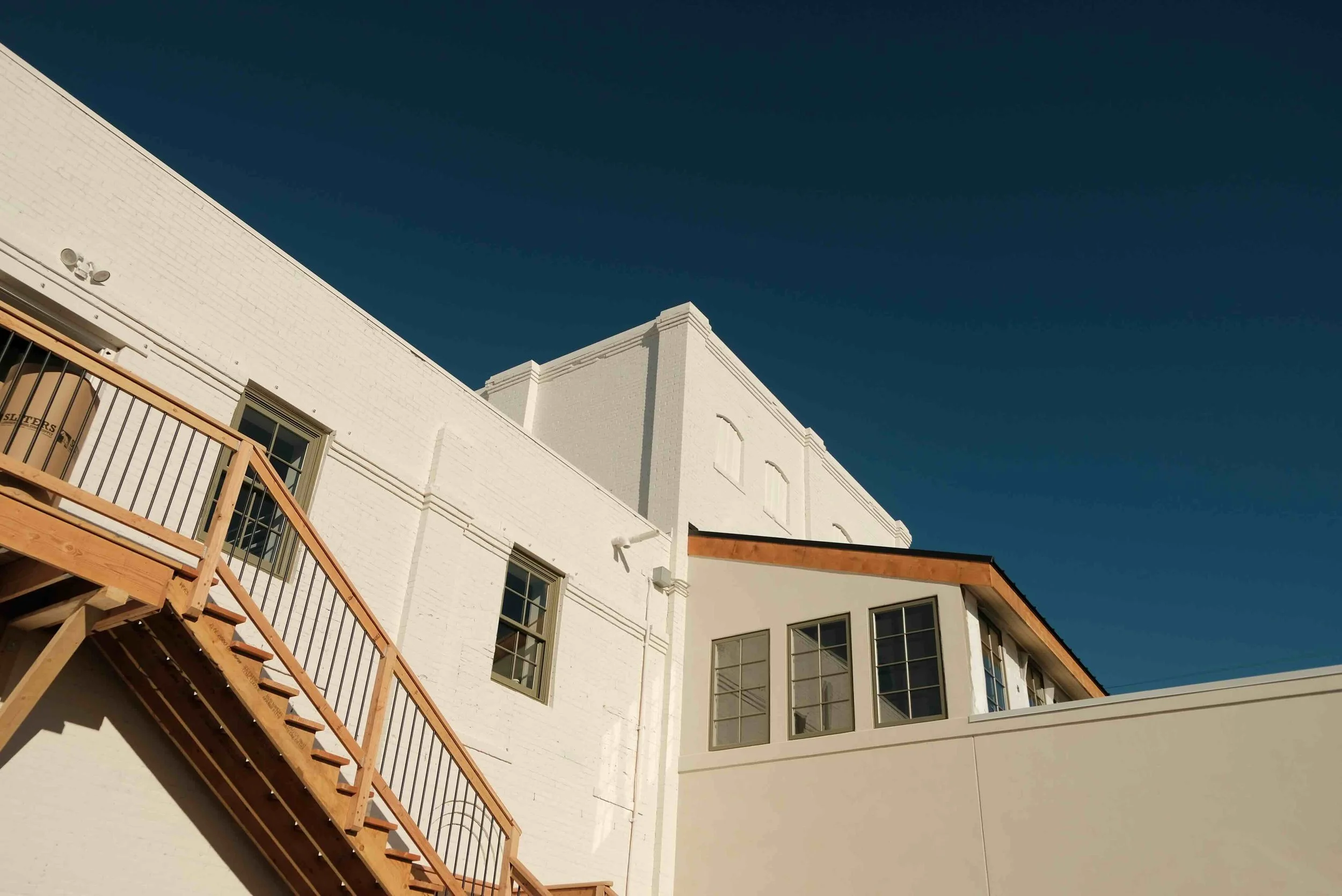
In industrial restorations, secondary egress is one example. While not always required in conventional residential design, additional means of exit can dramatically improve both safety and usability. In this project, a secondary stair enhanced fire safety while also creating a practical route for everyday access to outdoor space.
When life safety solutions are integrated thoughtfully, they rarely feel like concessions. Instead, they become part of how the space works.
Preservation Principle 3: Preserve the Elements That Tell the Story
Industrial buildings carry their history openly. Steel stairs, exposed masonry, and arched openings are not decorative gestures. They are the language of the building itself.
At our Montana brewery renovation project, preserving the original industrial steel stair railing and brick-lined arched windows was central to maintaining the building’s identity. These elements were carefully evaluated and retained while ensuring they met modern safety expectations.
New windows were required, but their proportions and patterning were designed to align with the historic fenestration. This level of detail is essential in historic building preservation, particularly when working with century-old masonry and structural systems.
Preservation is most successful when new interventions respect the original rhythm of the building rather than competing with it.
Preservation Principle 4: Make Space for Residential Comfort Without Erasing Character
One of the greatest challenges in restoring industrial spaces is making them feel livable without stripping away what makes them unique. High ceilings, deep floor plates, and limited exterior openings can work against traditional residential layouts.
Rather than subdividing the space excessively, this project focused on strategic interventions. A new loft office was introduced above the kitchen to add functionality while preserving openness. Additional living areas were layered thoughtfully, allowing the home to feel intentional rather than improvised.
Outdoor connections also play a critical role. The addition of a sunroom and rooftop living space created a private retreat that balanced the solidity of the historic structure with light, air, and views of the surrounding landscape.
Why Small-Scale Industrial Restorations Require Specialized Expertise
Restoring industrial buildings at a residential scale requires a rare overlap of experience. These projects demand commercial-level technical knowledge paired with a deep understanding of how people live, move, and inhabit space.
Small-scale mixed-use restorations often involve higher complexity than ground-up construction, not less. Code interpretation, preservation strategy, and design sensitivity must work together seamlessly. This is where adaptive reuse and historic preservation experience becomes essential.
Projects like Block Fifty demonstrate that industrial restoration is not about nostalgia. It is about continuity, allowing meaningful structures to remain active participants in their communities.
Starting an Industrial Restoration Project
Historic industrial buildings offer opportunities that new construction simply cannot replicate. When approached with clarity and care, they can become homes, workplaces, and mixed-use spaces that feel deeply rooted and entirely contemporary.
At Green Couch Design, we approach industrial restoration with the technical rigor of commercial architecture and the sensitivity of residential design. Explore our portfolio to see how adaptive reuse and historic preservation projects take shape, or connect with our team to discuss what might be possible for your building.

About Author Megan Lopp
Megan is part-owner of Green Couch Design, a boutique architecture firm located in Oklahoma. Megan writes in her spare time about all things architectural design, homestead living, interior design, and business ownership.