
In-Depth Guide to the Commercial Architecture Process
A Purposeful Path to a Lasting Building
The commercial architecture process is a structured journey that transforms an idea into a functional, enduring building. It involves multiple phases—from initial planning and design to construction and final completion—each requiring clear communication, strategic decisions, and expert coordination.
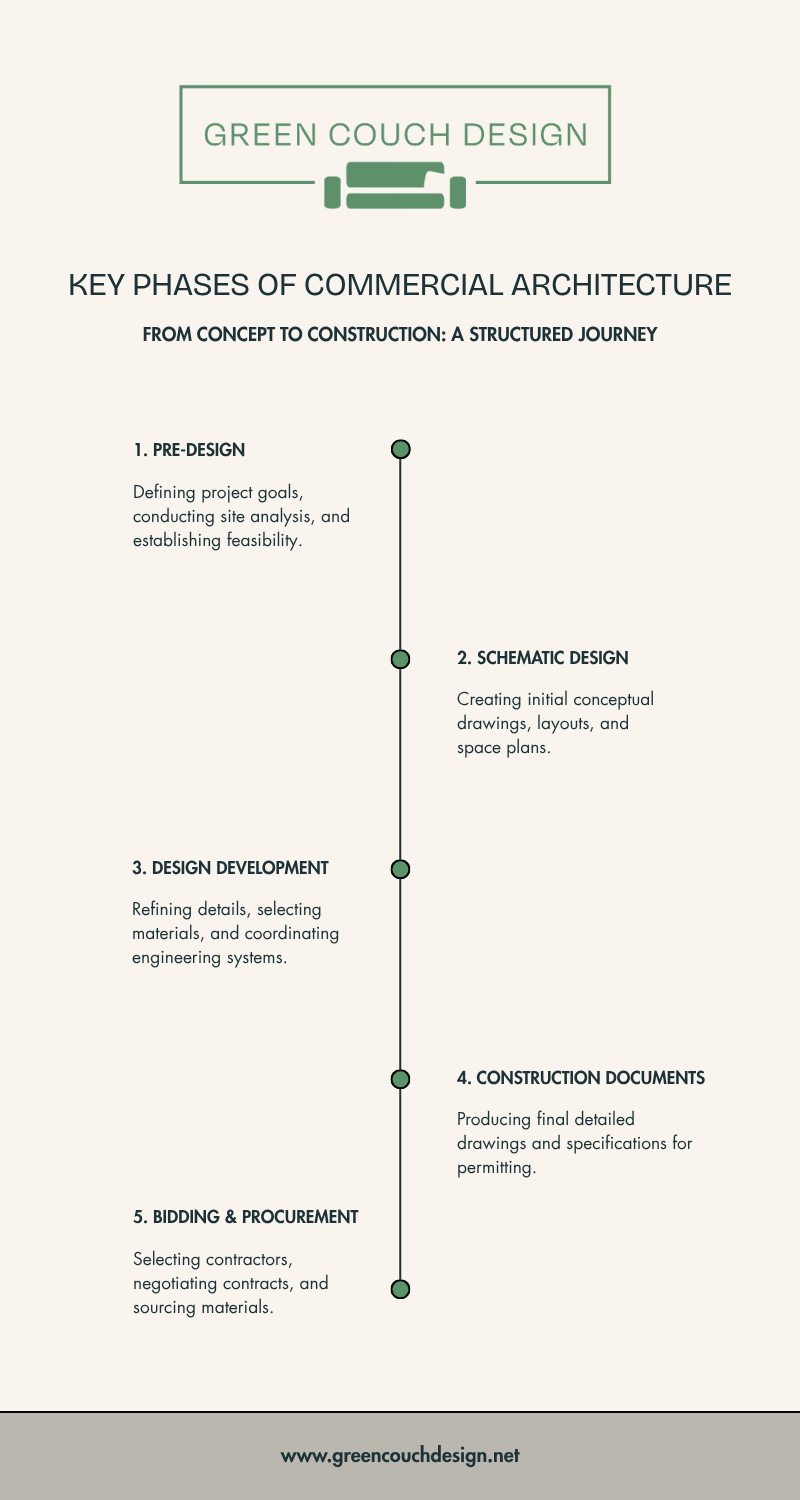
The key phases of the commercial architecture process include:
- Pre-Design - Defining goals, conducting site analysis, and establishing feasibility
- Schematic Design - Creating initial conceptual drawings and space plans
- Design Development - Refining details, selecting materials, and coordinating engineering
- Construction Documents - Producing final drawings and specifications for permitting and construction
- Bidding & Procurement - Selecting contractors and sourcing materials
- Construction Administration - Overseeing the build to ensure design intent is maintained
- Post-Construction - Final inspections, punch list completion, and project handover
A commercial building is more than a structure — it’s an asset, a brand statement, and a space that serves people. Moving from idea to completion requires a structured, intentional process to ensure the result is functional, on budget, and built to last.
Without a clear roadmap, projects can stall, costs can rise, and frustration can grow. Understanding each phase keeps stakeholders aligned and protects your investment.
This guide outlines the key stages so you can move forward with confidence, whether you're planning an office, retail space, or mixed-use development.
Phase 1: Establishing a Clear Foundation (Pre-Design)
Before any drawings are made, we lay the groundwork for the entire project. This phase is about deep listening, research, and strategic planning to align your goals with the realities of the site, budget, and regulations. A strong foundation here prevents costly changes later. The Pre-Design phase typically takes 2-8 months, depending on your specific needs, and it is where we set goals through meetings and workshops.
Defining Project Goals and Scope
The process begins with understanding your vision. During Programming, we define your goals, needs, and budget to ensure alignment before design moves forward.
We evaluate feasibility, timeline, construction and soft costs to confirm your vision fits practical constraints. By understanding how your business operates and who you serve, we create purposeful spaces that support function, reflect your brand, and serve your community.
More info about our approach to commercial projects
Understanding the Site with Master Planning
Once your project goals are clear, we turn our attention to the site. This involves a comprehensive site analysis, which includes:
- Topography: Understanding the land's contours and how they might influence design and drainage.
- Utility Assessment: Identifying existing power, water, sewer, and communication line connections.
- Environmental Factors: Assessing soil quality, natural features, and potential environmental impacts.
- Surroundings: Considering how the building will interact with adjacent properties and the broader community.
Master planning is a key part of pre-design, especially for larger or multi-building developments. It determines optimal building placement and orientation while identifying site challenges early.
By addressing issues before construction, master planning saves money and supports strategic phasing based on budget and timeline. The result is a clear site roadmap outlining footprints, access, and existing conditions to guide informed decisions.
Understanding zoning laws is also essential. These regulations dictate what can be built and where. We navigate these complexities to ensure your project complies with local requirements throughout Oklahoma.
_compressed.jpg?alt=media&token=9ad26ed3-2912-4b83-ae1d-cc5baa43d74a "Master plan showing building footprints, roads, and landscape for a commercial development - commercial architecture process")
We recently guided a client through the master planning process for a hospitality event venue, demonstrating how this initial step open ups potential and helps visualize the project's future. You can see how this plays out in our work on Hospitality Event Venue Master Planning: Sixty Six Vines.
Phase 2: The Core Commercial Architecture Process of Design
This is where your vision begins to take physical form. The design process is iterative, moving from broad concepts to highly detailed, technical documents. Each step refines the project, adding layers of detail and ensuring every decision is purposeful.
Schematic Design: Translating Vision into Form
The Schematic Design phase is where the information and decisions from Pre-Design translate into tangible plans. We take your vision and begin to sketch it out, focusing on space planning and how different areas will connect and function. This phase is often described as creating "rough sketches," but it's much more than that. It's about clarity and strategy.
During Schematic Design, we develop:
- Conceptual Sketches: Initial drawings that explore different design options for the building's overall form and aesthetic.
- Space Planning: Laying out interior spaces to ensure efficient workflow and comfortable user experience. This includes necessary space adjacencies and how people will move through the building.
- Adjacency Diagrams: Visualizing the relationships between different functional areas.
- Building Massing: Studies to determine the building's shape, size, and how it sits on the site.
- Site Plans: Preliminary layouts showing the building's placement, parking, access points, and initial landscaping ideas.
These drawings are more conceptual than definitive, but they provide a clear representation of the project's direction. We also provide initial cost estimates during this phase, helping to keep the project aligned with your budget expectations. It's important for you, as the project owner, to provide specific feedback and ask questions during this stage. This collaboration ensures the design truly captures your vision.
An excellent example of this phase in action is our work on The Underground Coffee & Coworking, where initial concepts transformed into functional and inviting spaces.
Design Development: Adding Detail and Definition
Once the Schematic Design is approved, we move into Design Development. This is where we refine the plans, adding layers of detail that bring the project closer to reality. Without a solid Design Development phase, the construction process can become a nightmare of confusion and costly changes. This phase is critical for translating broad concepts into intricate technical drawings and 3D models.
Key activities during Design Development include:
- Refining Plans: Detailed floor plans, elevations, and sections are developed, solidifying the architectural details.
- Material Selection: We work with you to choose finishes, textures, and colors that align with your brand identity and functional needs.
- Structural Systems: Collaborating with structural engineers, we determine the building's skeleton, ensuring stability and safety.
- MEP (Mechanical, Electrical, Plumbing) Engineering: We coordinate with mechanical, electrical, and plumbing engineers to integrate these critical building systems seamlessly into the design. This ensures optimal functionality, comfort, and efficiency.
- Interior Layouts: Further detailing of interior spaces, including built-ins and fixed elements.
- 3D Modeling: Creating detailed 3D models to help visualize the space and make informed decisions.
During this phase, we also ensure the design complies with sustainability and energy efficiency standards, reflecting our commitment to resilient and values-driven architecture. The expertise of an architect is invaluable here, ensuring cohesion and technical rigor.
Our project for Cornerstone Lobby and Cafe beautifully illustrates how Design Development adds depth and precision to a commercial space. For more industry insights, the American Institute of Architects (AIA) is a valuable resource.
Construction Documents: Creating the Final Blueprint
The Construction Documents phase is the culmination of all design efforts. This is where we produce the comprehensive set of drawings and specifications that serve as the final blueprint for construction. These documents are critical for obtaining necessary permits and approvals, and they provide detailed instructions for contractors.
These documents typically include:
- Final Architectural Drawings: Detailed plans, elevations, sections, and details that clearly illustrate every aspect of the building.
- Specifications: Written descriptions outlining the quality of materials, installation methods, and expected outcomes for all components.
- Structural Drawings: Plans detailing the building's structural framework, foundations, and load-bearing elements.
- MEP Plans: Comprehensive drawings for mechanical (HVAC), electrical, and plumbing systems.
- Site Plans: Detailed plans showing grading, landscaping, utilities, and other site-specific elements.
- Construction Schedules: Projected timelines for various construction activities.
- Bid Documents: Information necessary for contractors to prepare their proposals.
Without a complete and accurate set of construction documents, projects can face significant delays, cost overruns, and quality issues. These documents are the basis for a smooth construction process, ensuring everyone involved understands exactly how the building needs to be built.
Phase 3: From Plan to Reality (Construction)
With a complete set of construction documents, the project moves toward breaking ground. This phase involves selecting the right builder, procuring materials, and overseeing the construction itself to ensure the design is executed as intended.
Bidding, Negotiation, and Procurement
Once construction documents are finalized, the project enters the Bidding and Negotiation phase. This is where we help you select a qualified contractor to bring the design to life.
The process typically involves:
- Contractor Selection: Identifying reputable general contractors with experience in similar commercial projects in Oklahoma City, Midwest City, or wherever your project is located.
- Bid Evaluation: Contractors submit proposals based on the construction documents. We assist in evaluating these bids, considering not just the cost but also the contractor's experience, proposed schedule, and approach to the project.
- Contract Negotiation: Working with you to negotiate the terms of the construction contract, ensuring clarity on scope, schedule, and cost.
- Procurement: Once a contractor is selected, the procurement process begins. This involves the contractor sourcing and purchasing all necessary building materials, equipment, and engaging subcontractors. Clear purchase orders establish the agreement between the owner and supplier, ensuring materials meet specifications for the agreed price.
We believe in a transparent and thorough bidding process to secure a responsible and reliable contractor, setting the stage for successful construction.
Construction Administration: Upholding the Design Intent
The Construction Administration phase is where the design comes to life. While the general contractor manages the day-to-day operations on site, our role as architects is to ensure the project is built according to the approved design and specifications. We act as your advocate, overseeing the construction activities and serving as a point of contact between you, the contractor, and other parties.
Key activities during Construction Administration include:
- Site Observation: Regularly visiting the construction site to monitor progress and verify that the work aligns with the construction documents.
- Answering RFIs (Requests for Information): Contractors often have questions during construction. We provide timely clarifications to keep the project moving forward.
- Reviewing Submittals: Examining material samples, shop drawings, and product data submitted by the contractor to ensure they meet design requirements.
- Quality Control: While the contractor is responsible for quality, we review workmanship and materials to ensure they meet the standards outlined in the documents.
- Change Order Management: If unforeseen conditions or client-requested changes arise, we help evaluate their impact and facilitate formal change orders.
- Project Closeout: Assisting with final inspections, reviewing punch lists (lists of items needing correction before project completion), and ensuring all necessary documentation and warranties are provided.
This vigilant oversight ensures that the finished building truly reflects the vision we developed together. Our work on projects like IHS Drive-Thru Clinic Pawnee demonstrates our commitment to seeing a project through to successful completion, ensuring every detail aligns with the original intent.
Phase 4: Key Considerations for Impactful Commercial Design
A successful commercial building does more than meet basic needs. It reflects a brand, supports its users, and contributes positively to its environment. These considerations are woven throughout the entire commercial architecture process.
Balancing Functionality, Brand, and User Experience
In commercial architecture, design decisions are purposeful. We design spaces that work—beautiful, functional, and built to last. This means balancing the practical needs of a business with its unique brand identity and the experience of its users.
- Customer Behavior Analysis: For retail or hospitality, understanding how customers move, interact, and feel within a space is paramount. Design drives behavior, influencing engagement and sales. Large windows and open layouts, for instance, can attract foot traffic in retail.
- Employee Workflow: For office or industrial spaces, efficient layouts and comfortable environments directly impact productivity and employee well-being. Long, dark hallways won't help morale; natural light and flexible layouts will.
- Brand Identity Integration: Your building is a physical manifestation of your brand. Its aesthetics, materials, and overall feel should communicate your values and differentiate you in the market.
We emphasize that spaces should serve people, culture, and community. This means considering the psychological impact of architecture on employees and customers, ensuring that the finished space is not just efficient but also inspiring and welcoming.
Our expertise in Healthcare Facility Design and Boutique Hospitality highlights how we tailor design to specific user needs and brand identities.
| Space Type | Primary Design Priority | Key Considerations |
|---|---|---|
| Office | Productivity & Employee Well-being | Flexible layouts, technology integration, natural lighting, collaborative zones, quiet areas, ergonomic design, indoor environmental quality (IEQ) for workplace safety. |
| Retail | Customer Engagement & Sales | Brand visibility, intuitive customer flow, attractive displays, comfortable ambiance, accessibility, ample parking, dynamic storefronts, security. |
| Hospitality | Guest Experience & Comfort | Memorable aesthetics, comfortable seating, natural light, warm design cues, efficient service areas, durability of materials, brand consistency, adaptable spaces for events, safety features. |
| Industrial | Efficiency & Safety | Optimized layouts for machinery/logistics, durability, safety features, material handling, flexible expansion, energy efficiency, clear circulation paths, specialized ventilation, and structural integrity for heavy loads. |
Incorporating Sustainable and Resilient Design
Sustainable design is no longer optional; it’s an industry standard in commercial architecture. We believe in creating projects that are built to last—technically and emotionally—and that includes their environmental impact. Many architects today prioritize eco-friendly practices, and LEED-certified commercial spaces are becoming increasingly common.
Key aspects of sustainable design include:
- Energy Efficiency: Incorporating energy-efficient systems, high-performance insulation, and smart technologies to reduce operational costs and environmental footprint.
- Sustainable Materials: Specifying materials that are recycled, locally sourced, rapidly renewable, or have low embodied energy.
- Natural Light: Maximizing daylighting to reduce reliance on artificial lighting and improve occupant well-being.
- Indoor Environmental Quality (IEQ): Designing for good ventilation, thermal comfort, and reduced exposure to indoor pollutants to improve the health and productivity of occupants.
- Long-Term Operational Savings: While sustainable features may have an upfront cost, they often lead to significant savings over the building's lifespan through reduced energy and maintenance.
We also consider resilient design, especially given potential environmental challenges. If an area is prone to natural disasters, the building design should incorporate features to resist these.
For instance, the Green Building Council (LEED) provides frameworks for certifying sustainable buildings. Our work in Adaptive Reuse Architecture: Mixed-Use Project in Kalispell, Montana demonstrates our commitment to repurposing existing structures efficiently, showcasing the values-driven approach to sustainability.
Frequently Asked Questions about the Commercial Architecture Process
What are the key differences between commercial and residential construction?
Commercial construction is typically more complex, involving larger scales, multiple uses, and specialized systems such as advanced HVAC, electrical, and life safety requirements. These projects must meet stricter building codes, ADA standards, and fire regulations, and they often require more durable, industrial-grade materials. They also involve larger budgets, longer timelines, and a broader team of consultants and engineers.
How long does a typical commercial project take?
Commercial project timelines vary based on size and complexity, but most take anywhere from one to two years from concept to completion. The design phase can last 4–12 months, permitting may take several months depending on the jurisdiction, and construction often ranges from 12–18 months. Establishing realistic expectations early helps account for approvals, coordination, and potential delays.
What are the most common pitfalls to avoid?
The most common challenges stem from unclear goals, rushed pre-design work, incomplete documentation, and poor communication between the project team. Underestimating budgets or failing to account for site constraints like zoning and utilities can also create costly delays. Thorough planning, clear collaboration, and realistic budgeting are essential to keeping a commercial project on track.Conclusion: Your Partner in Building a Legacy
The commercial architecture process is a complex but manageable journey when guided by an experienced partner. Each phase, from initial goal-setting to final construction oversight, is an opportunity to make intentional decisions that create lasting value. By focusing on a clear process, we can build functional, resilient, and meaningful spaces that serve your business and community for years to come.
We don't just design buildings; we create solutions. We are your partner, not just a draftsman or decorator, committed to a clear, efficient, and collaborative process that emphasizes outcomes. We believe function matters as much as form, and our projects are built to last—technically and emotionally—reflecting a legacy-driven approach to design.
If you are ready to start a project, we can help guide you through the process. Learn more about our OKC commercial architecture services.