Why You Need Construction Documents Before You Start a Renovation
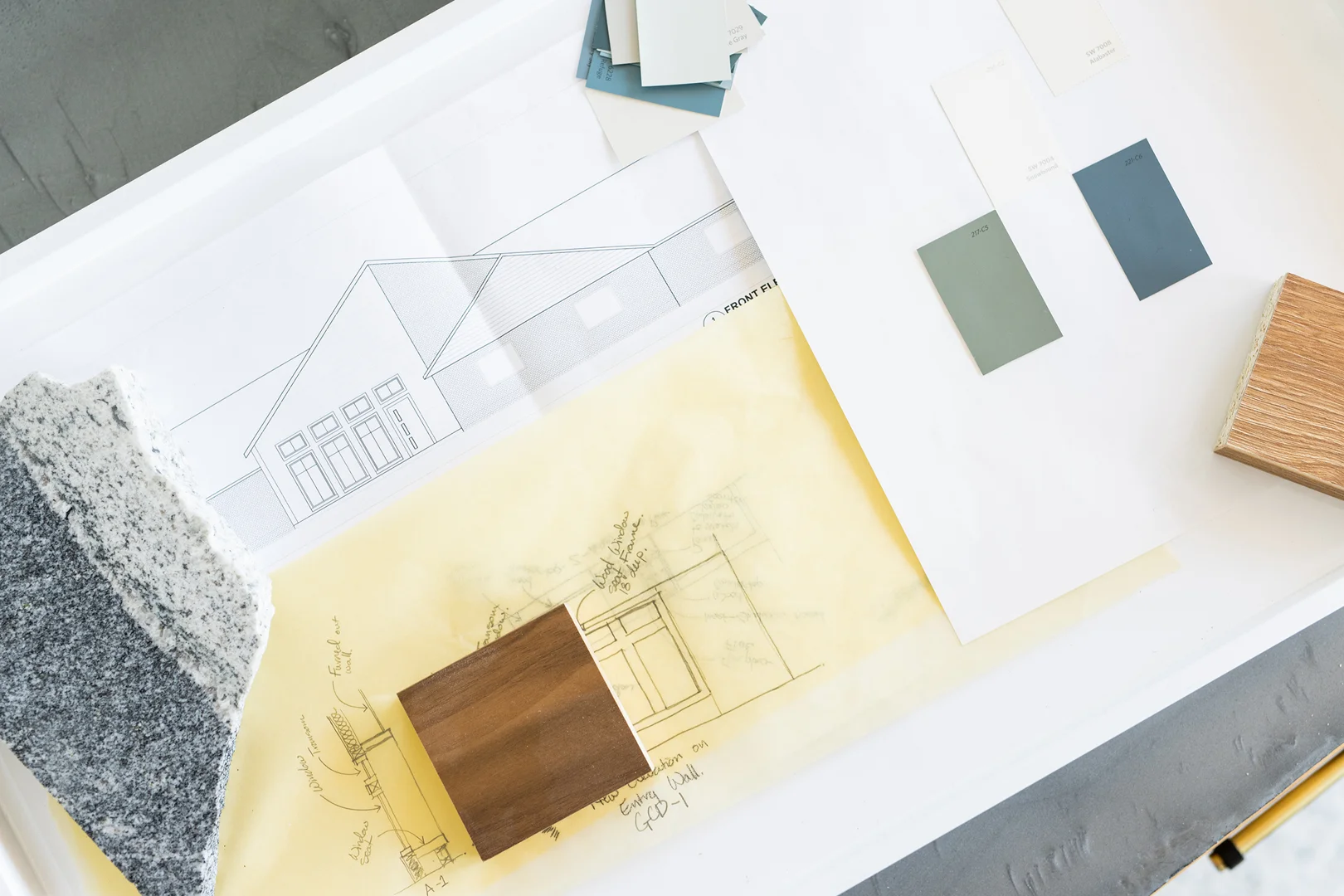
Why you need construction documents before you start a renovation comes down to one thing: without them, you are building blind. Construction documents are the complete technical package — drawings, specifications, and schedules — that tell every contractor, engineer, and inspector exactly what to build, how to build it, and to what standard.
Here is why they matter before a single wall comes down:
- Cost control — Detailed documents allow contractors to bid accurately, reducing surprise change orders
- Code compliance — Permit-ready drawings meet local building codes and zoning requirements from the start
- Coordination — Architects, structural engineers, and MEP consultants work from one shared set of disciplines work from one shared set of documents, preventing costly conflicts on site
- Legal protection — Construction documents serve as a binding reference if disputes arise between owner, architect, or contractor
- Accurate timeline — A complete document set prevents delays caused by missing information, RFIs, and idle crews
Skipping or rushing this step is one of the most common — and costly — mistakes homeowners make. Incomplete documents can result in $40,000 to $120,000 in additional costs per project, plus months of construction delays.
At Green Couch Design, our team helps homeowners navigate complex renovation and architecture projects with clarity and confidence. With deep experience in residential design, we know why you need construction documents before you start a renovation: they create the roadmap that protects your investment, aligns everyone involved, and helps keep the project on time and on budget. In this guide, we'll walk through what these documents include, what can go wrong without them, and how to get them right.
What Are Construction Documents and Why Do They Matter?
Construction Documents (CDs) are much more than just "the drawings." They are a comprehensive set of instructions from the architect to the contractor. Think of them as a highly technical recipe for your home. While earlier design phases focus on the "what" and the "where," the CD phase focuses on the "how."
This phase is where technical rigor meets design intent. We translate the creative vision into a project manual that includes every dimension, material, and installation method required. These documents serve as a contractual bridge between you and your builder. If a detail isn't in the CDs, it effectively doesn't exist in the eyes of the contract. This is why a thorough Commercial Architecture Process Complete Guide or a residential plan set must be exhaustive; they define the scope of work that you are paying for.
According to industry insights on Construction Documents: A Guide for Residential Contractors, these records carry a job from the initial agreement to final completion. They ensure that the person swinging the hammer understands the architect's intent without needing to call for clarification every ten minutes.
The Difference Between Blueprints and Construction Documents
In casual conversation, people often use the word "blueprints" to describe any architectural drawing. However, in a professional renovation, there is a significant distinction. Blueprints are generally just the floor plans and elevations—the pictures of what the house will look like.
Construction documents include those drawings, but they also incorporate:
- Technical Specifications: Written descriptions of the quality of materials and workmanship required.
- Material Schedules: Itemized lists of windows, doors, hardware, and finishes.
- Bidding Requirements: The specific instructions for how contractors should submit their pricing.
For example, a blueprint might show a wall. The construction documents will specify the What is a Building Envelope requirements for that wall, including the type of insulation, vapor barrier, and exterior cladding needed to protect your home from the Oklahoma elements.
Who Is Involved in Creating Your Documentation?
Creating a professional set of CDs is a collaborative effort. At Green Couch Design, we lead the process, but we don't work in a vacuum. A typical renovation set involves:
- Architects: We coordinate the entire set, ensuring the design remains intentional and functional.
- Structural Engineers: They provide the calculations and drawings for foundations, beams, and load-bearing walls.
- MEP Consultants: These experts handle the Mechanical, Electrical, and Plumbing systems.
- Interior Designers: They specify the cabinetry, tile patterns, and lighting fixtures that make a space feel like home.
You can see this level of detailed coordination in our Bold Black and White Kitchen Remodel, where every cabinet alignment and electrical outlet was planned long before the first tile was laid.
Why You Need Construction Documents Before You Start a Renovation
The urge to start swinging a sledgehammer can be overwhelming once you’ve decided to renovate. However, the Feasibility Stage of a Project must lead into a solid documentation phase to protect your finances. Research shows that searching for missing information or documents takes up roughly 35% of a construction professional's time. By providing a complete set of CDs, you eliminate that wasted time, which translates directly into lower labor costs.
According to Construction Project Documentation: Save Time, Money, and Avoid Rework, more than half of all rework in construction is due to poor data or inadequate communication. When you have a clear plan, the "oops" moments that cost thousands of dollars are significantly minimized.
Avoiding the High Cost of Skipping Construction Documents Before a Renovation
Skipping the documentation phase is a gamble where the house usually wins. When a contractor has to guess what you want, they will either overcharge you to cover their risk or undercharge you and hit you with change orders later. These "incompleteness costs" typically range from $40,000 to $120,000 on mid-to-large projects.
Investing in thorough documentation is essentially a form of insurance. For example, in our guide on Top 5 Home Remodels Value Add, we emphasize that the highest ROI comes from projects that are executed with precision. A minor kitchen renovation can see a 113% ROI in 2025, but only if you don't blow the budget on avoidable mistakes caused by missing drawings.
Ensuring Compliance with Building Codes and Permits
In Oklahoma City and surrounding areas like Midwest City, building officials require a "permit set" of drawings before they will issue a building permit. These drawings must prove that your renovation meets safety standards, energy codes, and zoning laws.
Understanding OKC Building Permits: Key Requirements & Rules is vital. If you start work without an approved permit based on professional documents, the city can stop your project, fine you, or even force you to tear down what you’ve built. Proper documentation ensures your project is legal and safe from day one.
The Technical Components of a Professional Renovation Set
A professional renovation set is organized logically so that different trades can find the information they need quickly. It’s not just a stack of paper; it’s a database of your home’s future.
Standard Organization and Sheet Ordering
We follow the United States National CAD Standard for sheet ordering to ensure consistency. This allows a plumber in Oklahoma City to read the same plans as an electrician in Midwest City without confusion. The standard order includes:
- G-Series (General): Cover sheet, code summaries, and project data.
- A-Series (Architectural): Floor plans, elevations, sections, and Building Envelope Construction details.
- S-Series (Structural): Foundation plans and framing details.
- M/E/P Series: Mechanical, Electrical, and Plumbing layouts.
This organization was critical for the Hill House Remodel, where we had to carefully integrate new structural elements into an existing home.
| Document Type | Purpose | Key Content |
|---|---|---|
| Permit Set | Legal Approval | Code compliance, life safety, zoning |
| Construction Set | Building Guidance | Finish schedules, millwork details, installation specs |
| As-Built Set | Future Reference | Final "as constructed" conditions |
How Digital Tools Improve Construction Documents Before a Renovation
The industry has moved far beyond hand-drafting. We use sophisticated CAD and BIM (Building Information Modeling) software like Revit to create "digital twins" of your project. These tools allow us to catch conflicts—like a duct running through a structural beam—before they happen on-site.
Digital tools are a massive win for your wallet. Using digital pre-construction tools has been shown to reduce renovation costs by 30–50%. Whether you are deciding to Add-on or Move On, these tools provide the clarity needed to make the right financial decision.
Managing the Documentation Process: Timeline and Roles
The construction documentation phase is often the longest part of the design process, typically taking 8 to 12 weeks for a standard home renovation. While it might seem like a long time to wait when you're eager to start, this is where the "5 P's" come into play: Proper Planning Prevents Poor Performance.
During this time, we are coordinating with consultants, refining specifications, and performing quality control checks. If you are considering Being Your Own General Contractor, having these documents is even more critical, as you will be the one responsible for answering every subcontractor's questions.
What Homeowners Should Look for During Review
When we present the final CDs for your review, don't just look at the pretty pictures. You should be looking for:
- Specification Clarity: Are the appliances, fixtures, and finishes exactly what you selected?
- Allowance Accuracy: If a specific tile isn't picked yet, is there a realistic dollar amount (an "allowance") set aside for it?
- Assumption Verification: Does the plan reflect how you actually live?
Before you dive in, it is helpful to review resources like Before You Remodel: Understanding OKC's Building Codes and Permits to understand the baseline requirements for your area.
The Risks of Rushing the Documentation Phase
Rushing the CDs is the fastest way to guarantee a 50% delay rate in your permit approval. When the building department finds errors or missing information, they send the plans back for "corrections," which can add weeks or months to your timeline.
Furthermore, rushed documents lead to "unforeseen site conditions." While some surprises are inevitable in a renovation, a thorough Commercial Design Process Oklahoma or a residential site survey minimizes these risks by documenting the existing structure accurately before design begins.
Frequently Asked Questions about Construction Documents
How long does the construction documentation phase typically take?
For a typical residential renovation, expect the CD phase to take between 8 and 12 weeks. Small projects like a bathroom might take 2-4 weeks, while complex whole-home remodels can take 3 months or more to fully coordinate with engineers and consultants.
What is the difference between a permit set and a construction set?
A permit set contains the minimum information required by the city to prove code compliance (safety, energy, and zoning). A construction set is much more detailed; it includes all the "aesthetic" instructions like tile patterns, paint colors, and cabinet details that the city doesn't care about, but your builder definitely does.
Can I start demolition before the construction documents are finished?
We strongly advise against it. Demolishing your home before you have a fixed-price contract and a permit—both of which require completed construction documents—leaves you vulnerable. You may discover structural issues that change the design, or find that the project you just started is over your budget.
Conclusion
At Green Couch Design, we believe that a successful renovation is built on a foundation of intentionality and precision. Why you need construction documents before you start a renovation isn't just about following the rules; it's about honoring your investment and ensuring that the home you dream of is the home that actually gets built.
We are here to be your partner in this process, providing the expertise and technical rigor needed to turn a vision into a legacy. If you're ready to start your renovation with the confidence that only professional documentation can provide, we invite you to explore our work and our process.
- OKC Residential Architecture Services
- View Our Architecture Portfolio
- Pawnee Courthouse Renovation Case Study
- Cornerstone Church Exterior Renovation
Design is a journey, and the best way to ensure you reach your destination is to have a perfect map. Let's build something that lasts.