Don't Let the Heat Escape Your Thermal Envelope
Why Building Envelope Insulation Is the Foundation of Energy Efficiency

Building envelope insulation is the system of materials that controls heat flow, air movement, and moisture transfer through your building's outer shell — its walls, roof, floors, windows, and doors.
Here's what you need to know at a glance:
- What it does: Slows heat loss in winter and heat gain in summer
- Where it matters: Walls, roof assemblies, floors, windows, and all joints in between
- Biggest risks: Air leaks, thermal bridging, and moisture buildup
- Key metric: R-value — the higher the number, the better the thermal resistance
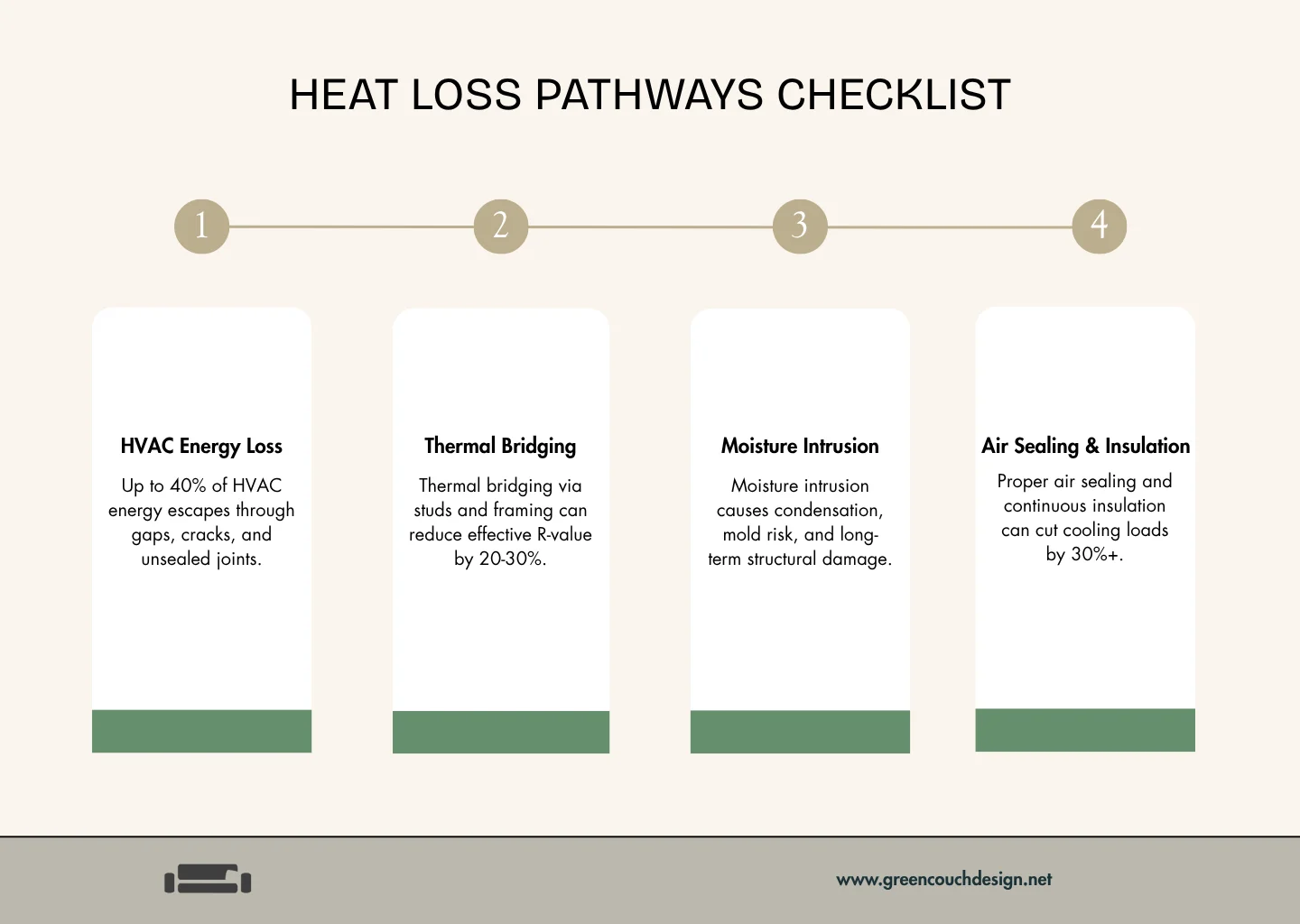
- Real impact: Homes and commercial buildings can lose up to 40% of their heating and cooling energy through gaps and cracks in the envelope
If your building is working harder than it should to stay comfortable, the envelope is usually where to look first.
Energy lost through walls, roofs, and windows is the single largest source of waste in most buildings. And it's not just about comfort. For commercial property owners and developers in Oklahoma, a leaky envelope means higher utility bills, accelerated wear on mechanical systems, and a building that costs more to operate every single year.
The good news: when insulation, air sealing, and smart material choices work together, annual cooling energy demands can drop by more than 30%.
At Green Couch Design, we think about building envelope insulation on every commercial project because it has a direct impact on comfort, energy use, and long-term value. From renovations to new construction, the goal is simple: keep the thermal envelope working the way it should, and make every design decision support that performance.
What is a Building Envelope and Why Does It Matter?
At its simplest, a building envelope is the physical barrier that separates the conditioned interior of a building from the unconditioned exterior environment. Think of it as a heavy winter coat for your property. When we design and build in Oklahoma City and Midwest City, we have to account for extreme weather swings—from freezing winter winds to blistering summer heat.
The building envelope is not just a single layer; it is an integrated system comprising the foundation, exterior walls, fenestration (windows and doors), and roof assemblies. Each of these components must work together to maintain structural integrity, control indoor air quality, and keep energy costs predictable. When one part of this system fails, the entire building suffers.
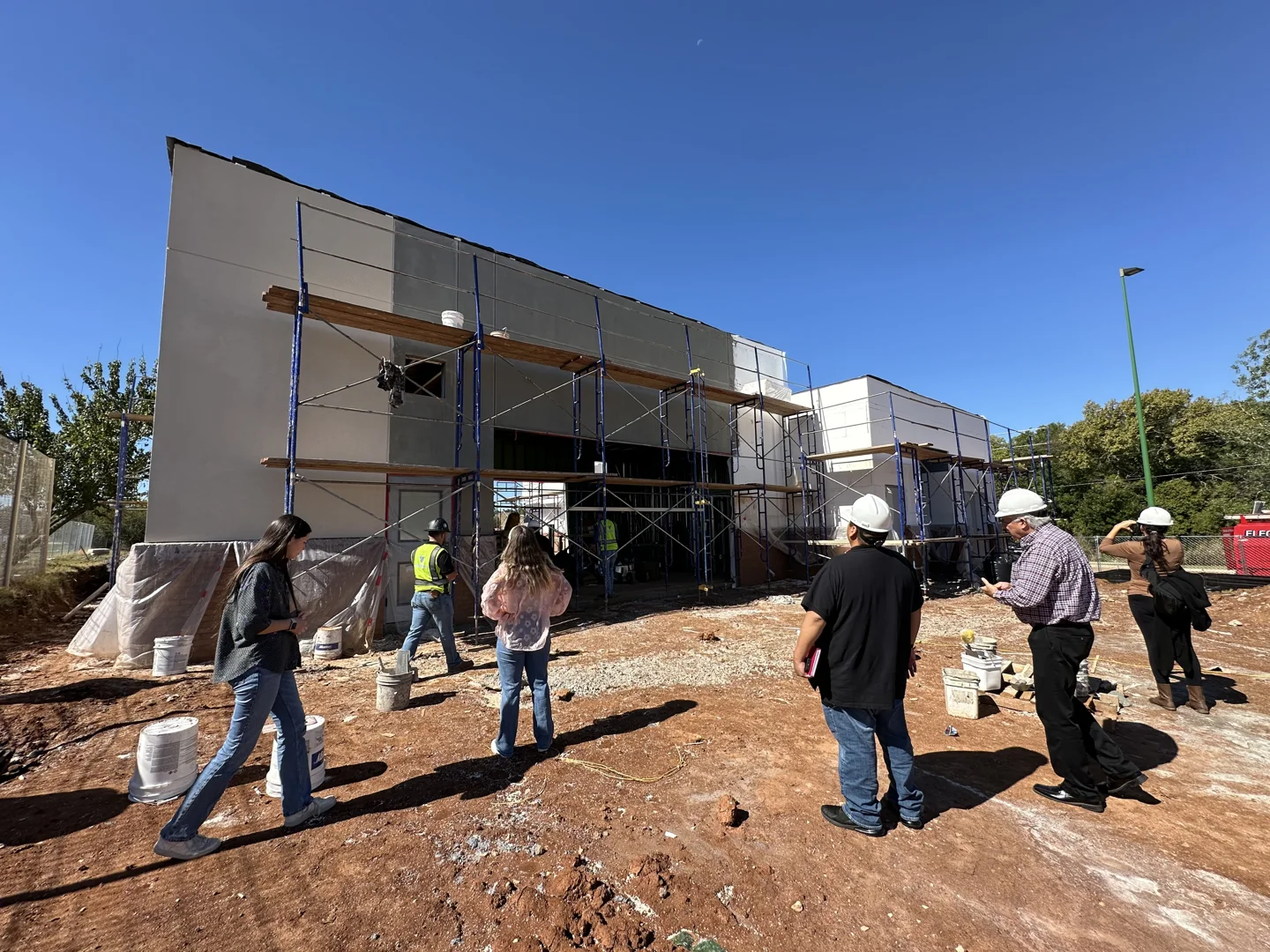
If you want to understand the foundational principles of this barrier, we recommend reading our detailed guide on What Is a Building Envelope. When we plan a project, we look at the physical envelope as a multi-layered shield that manages thermal, air, vapor, and water boundaries. Compromising any of these layers leads to drafty rooms, moisture damage, and overworked HVAC units. For commercial developers, a high-performance envelope is not a luxury—it is a critical strategy to protect the long-term value of the asset. To see how these principles are applied during actual development, check out our guide on Building Envelope Construction.
The Core Pillars of High-Performance Building Envelope Insulation
To design an energy-efficient building, we must understand how heat moves. Heat is persistent; it always travels from warmer spaces to cooler spaces until it reaches equilibrium. This transfer occurs through three main mechanisms:
- Conduction: Heat moving directly through solid materials (like wood studs, steel framing, or concrete).
- Convection: Heat moving through air currents.
- Radiation: Electromagnetic heat transfer (like the sun beating down on a flat roof).
Traditional thermal insulation works by slowing down conductive and convective heat flow. Its effectiveness is measured by R-value—the material's resistance to heat flow. The higher the R-value, the better the material is at keeping the outdoor climate where it belongs.
For commercial developers and business owners in Oklahoma, choosing the right insulation strategy is one of the most practical decisions you can make. It directly impacts your bottom line by reducing long-term operational costs, extending the lifespan of your mechanical systems, and keeping tenants comfortable.
Minimizing Thermal Bridging with Continuous Building Envelope Insulation
One of the most common mistakes in traditional building design is ignoring thermal bridging. A thermal bridge is a highly conductive pathway that allows heat to bypass your insulation.
Imagine a standard wall framed with structural steel studs. Steel has an incredibly low thermal resistance (an R-value of just 0.04 per inch). When you place insulation only between those studs, heat easily bypasses the insulation by traveling directly through the steel. This is known as a thermal bypass. Because framing can comprise nearly 25% of a wall's total surface area, this bypass represents a massive energy drain.
A common architectural strategy is to specify continuous rigid sheathing in the wall assembly. This places a continuous layer of rigid insulation outside the framing, helping reduce thermal bridging and keep the thermal envelope more consistent. Contractors and envelope specialists then detail and install the system according to project requirements. For a deeper technical overview, explore the Continuous Rigid Insulation Sheathing | Building America Solution Center resource.
Selecting the Right Materials for Building Envelope Insulation
Every building project has unique structural, environmental, and budgetary requirements. Selecting the right insulation material requires balancing thermal performance, vapor permeance, and environmental impact.
| Insulation Material | Where It Often Makes Sense | Why We Might Choose It |
|---|---|---|
| Expanded Polystyrene (EPS) | Exterior walls, slabs, and budget-conscious assemblies | A practical, moisture-resistant option when the project needs reliable performance without overcomplicating the wall system |
| Extruded Polystyrene (XPS) | Foundations, roofs, and areas exposed to moisture or pressure | Useful where durability, water resistance, and strength matter |
| Polyisocyanurate (Polyiso) | Commercial roofs and exterior wall assemblies | Often selected when we need strong thermal performance in a thinner profile |
| Spray Polyurethane Foam (SPF) | Tight cavities, attics, and hard-to-seal areas | Helps reduce air leakage while insulating, which can be valuable in complex custom buildings |
| Mineral Wool | Fire-rated walls, rainscreens, and sound-sensitive spaces | A durable, non-combustible option that also helps with acoustics and moisture management |
When specifying continuous insulation, products like DuPont™ Thermax™ Sheathing Insulation are highly regarded in commercial construction. With a glass-fiber-infused polyiso core, it offers high thermal resistance and excellent fire performance, and it can even serve as an integrated air and water barrier when the joints are properly sealed.
Managing Air Sealing and Vapor Barriers in Oklahoma Climates
Insulation alone cannot do all the heavy lifting. If air is leaking through your building's seams, your insulation's performance drops dramatically. In fact, buildings can lose up to 40% of their heating and cooling energy simply through cracks and gaps in the envelope.
In Oklahoma's mixed-humid climate, moisture management is just as critical as temperature control. We experience hot, humid summers and cold, dry winters. If warm, moisture-laden air infiltrates your wall cavities, it will hit a cold surface and condense into liquid water, leading to mold, rot, and structural decay.
The goal is simple: keep unwanted heat, moisture, and air movement under control so the building stays comfortable and efficient. A well-designed envelope helps reduce drafts, limits condensation risks, and supports better long-term performance. It can also work alongside smart site planning and solar strategies to lower monthly energy demands. You can learn more in our article on how to Save on Monthly Utilities Active and Passive Solar.
Additionally, roof assemblies must be designed to handle both heavy rain and thermal stress. For tips on managing severe weather, read our guide on the Best Roof Designs for Rainy Day. For a comprehensive look at how federal standards address residential and commercial insulation, consult the Insulation | Department of Energy guidelines.
Evaluating, Commissioning, and Verifying Envelope Performance
You cannot manage what you do not measure. In high-performance commercial projects, envelope performance should be verified, not assumed. The architect can help define the insulation, air barrier, and testing expectations in the drawings and specifications, while the contractor and qualified testing professionals typically handle installation checks, blower door testing, thermal imaging, or other diagnostics in the field. Building envelope commissioning helps keep everyone aligned.
The most common validation methods include:
- Blower Door Testing: A qualified testing professional can pressurize or depressurize the building to measure air leakage rates. Airtightness targets should be set during design and verified during construction.
- Thermal Imaging: Infrared cameras can help reveal missing insulation, compression, or thermal bridges that let heat bypass the envelope.
- Moisture Mapping: Moisture checks can identify hidden water accumulation in wall or roof assemblies before it leads to bigger problems.
To ensure your investment delivers the expected energy savings, it is highly recommended to partner with certified professionals. You can learn more about these diagnostic procedures through the Building Envelope Evaluation & Inspection services.
Frequently Asked Questions About Thermal Envelopes
How much energy is lost through a compromised building envelope?
Buildings with compromised or poorly sealed envelopes can waste up to 30% more energy than those with properly maintained systems. Properly sealing air leaks and optimizing insulation can reduce your heating and cooling costs by up to 20% annually.
What is the difference between HFO and HFC spray foam insulation?
Here is the plain-English version: older HFC spray foams could trap thousands of times more heat in the atmosphere than carbon dioxide if released. Newer HFO-based spray foams deliver similar insulation performance with a much lower climate impact, often near a GWP of 1.
How does continuous insulation prevent thermal bridging?
Continuous insulation is installed on the exterior side of the structural framing. By covering studs, plates, and headers with a continuous thermal barrier, it eliminates the conductive pathways (bridges) that otherwise allow heat to bypass cavity insulation.
Conclusion
At Green Couch Design, we believe architecture should be purposeful, beautiful, and built to last. A high-performance building envelope is not just about meeting code; it is about designing for efficiency, durability, and comfort. We collaborate with informed contractors and building professionals to help execute that vision, while also adapting when the contractor team is owner-selected.
Whether you are planning a new commercial development or undertaking a sensitive historic renovation, investing in a robust thermal envelope pays dividends for decades. To see how these principles apply in a local project, take a look at our work on the Cornerstone Church Exterior Renovation. Thoughtful envelope design can help a building perform better, last longer, and serve its community well.