What "Legacy" Means When You're Designing a Home for the Next 50 Years
What "Legacy" Means When You're Designing a Home for the Next 50 Years — And Why It Changes Everything
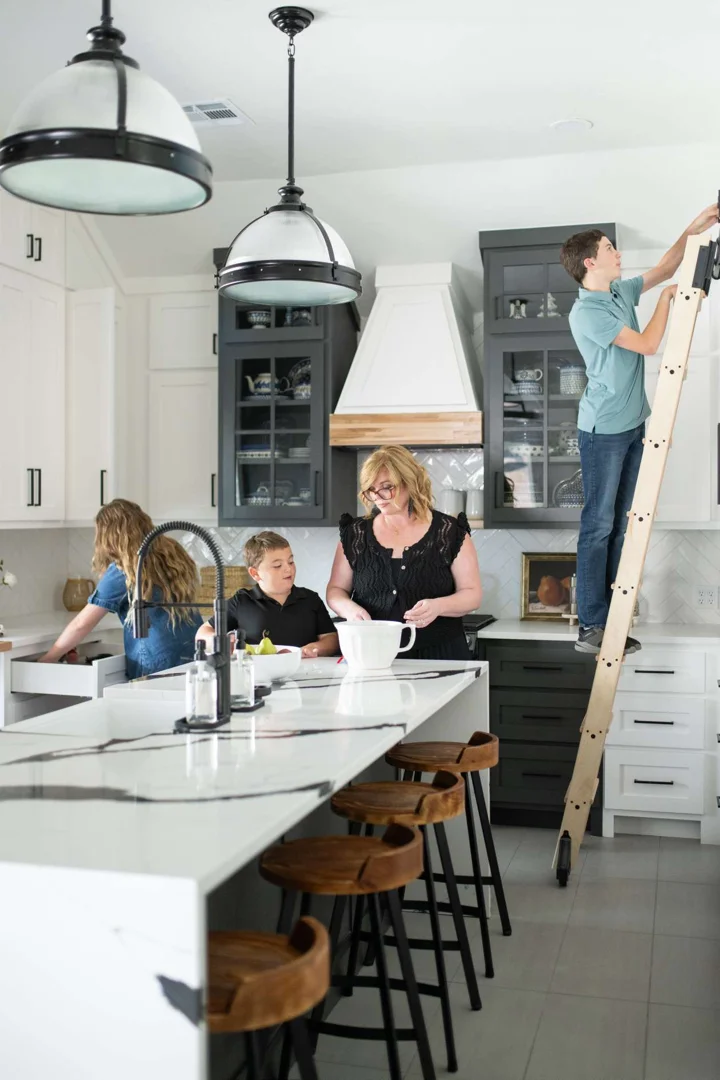
When you design a home with the next 50 years in mind, legacy means much more than picking durable materials or a classic layout. A legacy home is a custom property created to support multiple generations, adapting as your family grows, ages, and changes while preserving its beauty, function, and emotional meaning over time.
Here's a quick summary:
| Legacy Home Pillar | What It Means in Practice |
|---|---|
| Timeless design | Architectural choices that won't feel dated in 10, 20, or 50 years |
| Adaptable layouts | Spaces that shift from nursery to office to in-law suite as life changes |
| Durable materials | Slate, natural stone, hardwood — built to outlast multiple roof replacements |
| Multi-generational function | Guest suites, accessible entries, dual primary suites, gathering spaces |
| Emotional intentionality | Built-ins, story walls, and spaces designed to hold family traditions |
This is about more than square footage or finish level. It's about designing a home where your family's story actually unfolds — where the Sunday dinners happen, where the grandchildren run the same halls their parents did, where the structure itself becomes part of your family's identity.
Over the next decade, the largest transfer of real estate wealth in American history will take place as the Baby Boom generation moves out of primary residences. The homes that hold their value — financially and emotionally — are the ones built with this longer view in mind from the very start.
At Green Couch Design, we know that designing a home with a legacy mindset changes every choice, from the overall layout to the smallest details. In this guide, we'll show you what that really means when you're creating a home meant to serve your family well for the next 50 years.

To explore this philosophy deeper, you can read our comprehensive Legacy Guide or review the insights on Creating a Legacy Property: How to Think About Multi-Generational Design — RISMedia, which highlights how intentional spatial design preserves both family unity and individual privacy.
Designing for Generational Flow and Adaptability

The layout of a legacy home must be dynamic. The way a family uses a house when the children are toddlers is vastly different from how they will use it when those children are teenagers, young adults, or parents themselves. Designing for generational flow means creating a floor plan that can seamlessly adapt to these shifting life stages without requiring major structural renovations every decade.
A common pitfall in luxury home design is building for sheer size rather than smart spatial utility. We often caution clients about the Downside of Building Super-Sized Homes. Massive, cavernous spaces frequently feel cold and unused once children grow up and move away. Instead, a legacy home focuses on "zoned living."
By creating distinct wings or floors that can be closed off or opened up as needed, the home remains comfortable whether there are only two people in the house or thirty. Proper acoustic separation between these zones is crucial. Solid-core doors, insulated interior walls, and thoughtful spatial buffers ensure that a late-night movie in the media room won't disturb grandparents sleeping in a nearby guest suite.
Balancing Timeless Aesthetics with Modern Functionality
To endure for 50 years or more, a home’s aesthetic must transcend the rapid-fire trend cycles of the design world. Homes built entirely around the dominant look of a single decade can feel dated within ten years and dilapidated within twenty. True legacy architecture relies on timeless design principles: symmetry, balanced proportions, quality millwork, and a neutral palette of natural materials.
We believe in the concept of "place-making." Your home should feel deeply connected to its physical site, drawing inspiration from the local landscape and regional architectural history. In Oklahoma, this means designing structures that feel grounded in our rolling plains and prairie horizons. You can read more about this approach in our article on Place-Making: Ground Your Home. By using classic architectural forms, we ensure that the home retains its dignity and relevance for decades to come, while modern mechanical systems, high-performance insulation, and smart infrastructure operate quietly behind the scenes.
What "Legacy" Means When You're Designing a Home: The Role of Flexible Spaces
At the heart of an adaptable floor plan are flexible spaces that can serve multiple purposes over time. A room that starts as a nursery can easily transition into a quiet home office, a homework study, and eventually a private main-floor guest suite for visiting adult children or aging parents.
One of our favorite "invisible" future-proofing strategies is the integration of stacking closets. By aligning walk-in closets vertically on the first and second floors, we frame the home to accommodate a future residential elevator. If mobility needs arise 30 years down the road, the closets can be converted into an elevator shaft with minimal structural disruption.
Similarly, incorporating dual primary suites—one on the main floor and one on the upper level—provides incredible flexibility. It allows younger parents to sleep near their children's bedrooms upstairs, and later transition to the main-floor suite as they age, leaving the upper level as a dedicated wing for visiting guests. Bunk rooms with built-in cabinetry and storage are another excellent legacy feature, providing a fun, dedicated space for grandchildren to sleep during holiday visits.
Materials and Construction Methods Built to Last
If a home is going to stand for 50 to 100 years, the physical shell must be incredibly resilient. This requires prioritizing materials that age gracefully—what we call the "patina palette." These are natural materials that actually look better as they wear, gaining character and depth over time rather than degrading and requiring replacement.
For example, genuine fieldstone or Oklahoma limestone has a visual weight and durability that synthetic, manufactured stone simply cannot replicate. While synthetic stucco (EIFS) often cracks and fails after a decade, natural stone and brick will stand for generations.
The roof is another critical consideration. While a standard asphalt shingle roof has a life expectancy of only 20 to 25 years (and even less in Oklahoma's severe weather), a slate or standing-seam metal roof can easily last 50 to 100 years. Pair this with copper gutters and flashing—which develop a beautiful verdigris patina over the years—and you have an exterior envelope that requires minimal maintenance while steadily increasing the home's historic value.
| Material Category | Standard Custom Material (20-Year Life) | Legacy Material (50 to 100-Year Life) | Legacy Benefit |
|---|---|---|---|
| Roofing | Asphalt Shingle | Slate, Clay Tile, or Standing-Seam Metal | Outlasts multiple standard roofs; withstands extreme weather. |
| Siding/Exterior | Synthetic Stucco (EIFS) or Vinyl | Natural Stone, Brick, or Fiber Cement | High durability; develops a beautiful natural patina; low maintenance. |
| Gutters | Aluminum | Copper | Extremely long-lasting; develops a stunning verdigris finish over time. |
| Flooring | Engineered Wood or LVP | Solid Hardwood or Natural Stone | Can be refinished multiple times; gains character with age. |
| Windows | Double-Pane Vinyl | Triple-Pane Wood-Clad or Steel | Superior thermal performance; structural strength across decades. |
What "Legacy" Means When You're Designing a Home: Invisible Accessibility
A true legacy home must be accessible to family members of all ages, from toddlers learning to walk to grandparents with limited mobility. However, incorporating these features does not mean your home has to look or feel like an institutional care facility. We practice "invisible accessibility"—integrating universal design elements so seamlessly into the architecture that they simply feel like luxurious, thoughtful design choices.
This includes:
- Zero-step entries: Designing at least one main entrance, typically through the garage or a side porch, with no threshold step, making it easy for strollers and wheelchairs alike.
- Wider hallways and doorways: Planning for 36-inch wide interior doors and spacious hallways. This not only ensures wheelchair accessibility but also makes the home feel grander and more open.
- Main-floor living: Ensuring that all essential daily functions—the primary bedroom, kitchen, laundry, and main living areas—are located on the ground floor.
- Curbless showers: Installing beautiful, zero-threshold walk-in showers with built-in benches and stylish, structural grab bars that double as towel racks.
By incorporating these features from day one, you ensure that the home remains a safe, welcoming sanctuary for you and your loved ones at every stage of life.
The Financial and Emotional Investment of a Generational Estate
Building a legacy home is a significant financial commitment. Because you are prioritizing superior craftsmanship, durable materials, and highly adaptable layouts, the upfront cost of construction is higher than a standard custom build. However, this must be viewed as a long-term investment. By investing in a 50-year structure today, you are avoiding the frequent, costly remodeling projects, roof replacements, and exterior repairs that plague standard homes.
Beyond the financial return, the emotional ROI of a legacy home is immeasurable. Personalization elements—such as custom built-in cabinetry designed to display family heirlooms, a dedicated "story wall" for family photos, or even a custom-carved mantle over the fireplace—strengthen the home's connection to your family history. When a home is tailored so specifically to your family's values and lifestyle, it ceases to be just real estate. To understand when this level of customization is right for your goals, read our guide on When Custom Residential Design Is Worth the Investment (And When It's Not).
How do you future-proof a home's layout without sacrificing current aesthetics?
Future-proofing a layout is all about clever, flexible spatial planning. We utilize architectural elements like pocket doors and movable partitions to allow spaces to transition from open-concept gathering zones to quiet, private retreats.
For instance, a secondary living room can be designed with hidden, heavy-duty pocket doors. When open, the room flows naturally off the main great room. When closed, it becomes an acoustically isolated bedroom suite or a private home office. Built-in, hidden storage is another excellent tool. By designing deep, integrated closets and built-in cabinetry, we can hide modern technology and utility systems, keeping the focus entirely on the clean, timeless lines of the architecture.
Why is early collaboration with an architect essential for a legacy build?
A legacy build is a complex, highly coordinated undertaking that requires a clear vision from the very beginning. To prevent costly mistakes, coordinate complex permitting, and ensure the home is perfectly integrated with its site, early planning is essential.
Many homeowners wonder whether they should hire an architect or a builder first. We dive deep into this topic in our article, Residential Architect vs Builder: Who You Should Hire First. Collaborating with an architect early on allows you to establish clear project goals, conduct comprehensive feasibility and zoning studies, and design a home that is truly customized to your family's long-term needs. Your architect will act as your advocate throughout the entire process, ensuring that the original design intent and structural integrity are maintained from the initial sketch to the final handshake.
Conclusion
At Green Couch Design, we believe that architecture should be purposeful, beautiful, and built to last. Designing a home for the next 50 years is one of the most meaningful investments a family can make. It requires a shared vision, a commitment to exceptional craftsmanship, and a deep understanding of how physical spaces shape human relationships.
If you are ready to begin planning your family's legacy property in Oklahoma City or the surrounding areas, we would love to help you design a space that will stand the test of time. Discover our approach to high-quality, intentional design by exploring our portfolio of OKC Residential Architecture. Let's build a foundation for your family's story to unfold for generations to come.